
Primary Phone: (262) 880-8206 Office Phone: (262) 800-1074

How Wisconsin Winters Impact Your Concrete Driveway (and How to Prevent Cracking)
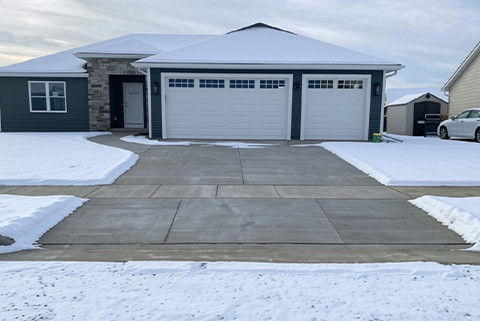
Protect Your Concrete Flatwork Before the Lake Michigan Freeze Hits
Living in Southeast Wisconsin means enjoying beautiful changing seasons, but it also means putting up with some of the harshest winter conditions in the Midwest. Between lake-effect snowstorms and constant temperature swings in Racine and Kenosha counties, winter can take a heavy toll on concrete flatwork.
If you want your concrete driveway, garage slab, or patio to last for decades, understanding how winter damages concrete—and taking a few steps to protect it—can save you thousands in premature replacement costs.
The Science Behind Winter Concrete Damage
Concrete is strong, but it is naturally porous. Small microscopic pores and capillaries throughout the slab act like a sponge. When water infiltrates these pores and temperatures drop below freezing, three main mechanisms trigger concrete failure:
1. Freeze-Thaw Expansion
When water trapped inside concrete freezes, it expands by about 9%. This expansion generates internal pressure within the slab. When the temperature cycles back above freezing during a mid-winter thaw, the ice melts, only to refreeze when temperatures plunge again. Over dozens of cycles in a single Wisconsin winter, this continuous expanding force breaks down the concrete, leading to surface flaking, pitting, scaling, and cracking.
2. Frost Heave
Below your concrete driveway lies subgrade soil. If water collects underneath the slab and freezes, the expanding ground swells and lifts the concrete upward—a phenomenon known as frost heave. When the ground thaws in spring, the slab settles back down, often unevenly, which can snap even the thickest concrete slabs.
3. Chemical De-icers & Road Salt
Rock salt (sodium chloride) and chemical de-icers lower the freezing point of water, forcing ice to melt into liquid brine. This liquid seeps deeper into the concrete pores and expands when temperatures drop low enough for the brine solution to freeze. Additionally, parking a vehicle coated in highway road salt concentrates salt water on the exact same spot in your driveway every single day, leading to localized surface pitting.
How to Protect Your Concrete Driveway This Winter
Use Clean Sand Instead of Rock Salt
While rock salt is convenient, chemical de-icers strip concrete of its natural resilience, especially concrete poured within the last 1–2 years. Switch to coarse mason sand for traction. Sand provides an immediate grip on icy driveways without causing chemical degradation or freeze-thaw acceleration.
Clear Snow Promptly & Mind Your Shovel
Shovel or snow-blow your driveway early before heavy vehicle traffic packs the snow down into hard ice. When shoveling, use plastic-edged blades rather than metal shovels, which can chip or gouge control joints and surface edges.
Park Vehicles in Varying Spots
Avoid parking your primary vehicle in the exact same footprint every day during winter. Salt-laden snow and slush dripping off wheel wells concentrate aggressive chemical runoff in one location. On mild winter days, rinse off your vehicle's undercarriage and give your driveway a quick wash to flush away salt residue.
Direct Downspouts Away from Flatwork
Ensure roof gutters and downspouts discharge runoff at least 3 to 5 feet away from driveways, sidewalks, and garage slabs. Excess roof water flowing directly onto or under concrete creates saturation zones that guarantee severe frost heave and cracking when the ground freezes.
Seal Control Joints & Surface Cracks
Water expands most aggressively where it sits in open joints and hairline cracks. Inspect your driveway late each fall and fill open control joints or cracks with a high-grade, flexible polyurethane concrete sealant to keep liquid water out.
The R.E.P. Difference: Built to Withstand Wisconsin Winters
Preventative maintenance goes a long way, but long-term durability starts under the surface. At R.E.P. General Contracting, we engineer all of our concrete flatwork—from garage slabs to driveways—specifically for Racine and Kenosha’s heavy freeze-thaw environment.
We install every concrete project over a thick, compacted gravel base to facilitate proper sub-grade drainage, prevent frost heaving, and guarantee a solid foundation.
- Need a price estimate on replacing a damaged driveway or garage floor before winter sets in? Contact R.E.P. General Contracting today at (262) 880-8206 or fill out our online form to request a no-obligation quote.
- Managing a commercial property? Ask us about our 24/7 commercial snow plowing, salting, and snow removal services to keep your parking lots safe all winter long.